Half ruin, half romantic rebuild
Moorish Castle
A ridge-top line of battlements where the Royal Tower hands you the cleanest head-on shot of Pena across the valley.
Here's the thing to understand before you climb: the "medieval castle" you walk isn't entirely medieval. The Moors built this ridge fort in the 8th or 9th century, Christian forces took it in 1147, and then Ferdinand II reconstructed much of it in the 19th century as a romantic ruin to admire from Pena. So you're walking about 450 m of battlements that are part genuine old stone, part Victorian-era rebuild — and once you know that, the place gets more interesting, not less. The walk runs the spine of the ridge to the Royal Tower at the high point, Ferdinand II's favourite spot and the reason most people come. Down in the courtyard there's a cistern; near the entrance, the ruins of a chapel and old granaries; and a small interpretation centre fills in the medieval layer. It's a fort, not a palace — the reward is the wall-walk and the view, not gilded rooms.
The "medieval" castle you walk is half real ruin, half romantic rebuild — Ferdinand II reconstructed it in the 1800s partly so it would look good from Pena across the valley.
What to see
- The roughly 450 m rampart walk along the full ridge — open battlements, not interior rooms
- The Royal Tower (Torre Real) at the high point: Ferdinand II's favourite vantage and the best head-on view of Pena
- The courtyard cistern, dug to hold the fort's water supply
- Chapel ruins and old granaries/silos near the entrance — the oldest fabric on site
- The small medieval interpretation centre that explains what's genuine ruin and what's 19th-century rebuild
The Royal Tower at the high point is where you get THE photo of Pena Palace — a clean, head-on shot across the valley that you simply can't take from inside Pena itself. It was Ferdinand II's own favourite vantage point, and it's still the single best reason to climb.
Why visit Moorish Castle
We'd send you here for one thing above all: the Royal Tower gives you the cleanest head-on view of Pena Palace sitting on the opposite peak, and no photo from inside Pena itself comes close. The rampart walk along the ridge is genuinely good — open air, a clear coastline on a good morning, real sense of the terrain. Would we tell a first-timer to pick this over Pena or Regaleira if they only had one stop? No. But that's the wrong question, because Pena and the Moorish Castle sit on the same hill, about 630 m apart with mostly flat ground between them, and the 434 serves both. So you don't choose — you do both in a morning. Skip it only if steep, uneven stone steps are genuinely off the table for you; there's no way around the climbing here.
The full story
The hilltop was busy long before any castle. Under the medieval necropolis, excavations turned up Neolithic material and a complete ceramic vessel of a 5th-century-BC type, so people were up here millennia before Islamic builders raised the walls in the 10th century. Sintra stayed under Moorish rule until 1147, when it passed to Afonso Henriques, Portugal's first king; in 1154 the Knights Templar, under Gualdim Pais, were chartered to run the area and threw up the second ring of walls to shelter the local population and their harvests. Two details reward a closer look. The Porta da Traição (Door of Betrayal) is a concealed postern in the roughest, least-used stretch of wall, a discreet escape route during a siege, named for the weak point such an opening created. And the horseshoe arch into the Praça de Armas isn't medieval at all; King Ferdinand II added it in the 19th century to evoke a Moorish look while turning the old muster ground into a place to sit and take in the view. Don't skip the Church of São Pedro de Canaferrim, Sintra's first parish church, with 15th-century Gothic paintings surviving in the apse. Nearby sits the tomb Ferdinand built for bones that couldn't be sorted as Christian or Moorish, its stone carved with both a crescent and a cross.
Getting there
Take the 434 from Sintra station — it's the loop bus that climbs the hill and serves both this fort and Pena. The Moorish Castle stop comes just before the Pena stop, so watch for it. From the drop-off it's a short uphill walk to the entrance. Driving up yourself is a poor idea: the hill road is narrow and parking is scarce, which is exactly why the 434 exists. The same bus then carries you the short hop on to Pena.
Plan your visit
It's markedly cooler and windier on the ridge than in Sintra town, even on a warm summer day — bring a layer you'll be glad of on the exposed battlements. And aim early: by afternoon, haze frequently swallows the Atlantic view, so the coastline you came up for may simply not be there.
Underestimating the climb. People rock up in flip-flops or thin-soled sandals and then pick their way gingerly across steep, uneven stone steps that have no consistent rise — the footing is the real challenge here, not the distance. Wear proper closed shoes and you'll actually enjoy the rampart walk instead of staring at your feet.
Accessibility
Be honest with yourself about this one. The terrain is steep, uneven stone steps and rough footing along the ramparts, and sources don't even agree on the step count. There's no smoothing it over — it's a hilltop fort reached and crossed on foot. Solid closed shoes only; flip-flops are a genuine mistake here.
Good to know
- Private cars cannot reach the castle. From Lisbon, take the Sintra-line train to Sintra, then bus 434 (the tourist circuit) direct from the station, or a taxi. Park in Sintra's historic centre or peripheral lots; there is exactly one disabled space on site.
- Three marked trails climb up from town, all free to walk and all uphill: Santa Maria (1.77 km, ~1 hr), Villa Sassetti (1.85 km, ~45 min), and Seteais (2.41 km, ~1.5 hr). The official site doesn't rate their difficulty or elevation, so check current status and pace yourself.
- Open 09:30-18:00, last admission 17:30. The staffed ticket office shuts 12:00-13:00 for lunch, but automatic ticket machines keep selling over that window, so a midday arrival still works.
- On-site you'll find a store, a cafeteria and restrooms, all near the interior and noted as wheelchair-accessible. The Interpretation Centre lives inside the old church.
- Reduced-mobility access is real but limited: a vertical lifting platform reaches the church/Interpretation Centre and upper wall-walk heights, and the inner wall route is accessible with a warning about steeply sloping sections. Manual folding wheelchairs with traction/assist gear can be reserved (roughly 20 min to assemble, 90 min use plus a 15 min return buffer); without booking they're subject to stock. Portuguese Sign Language-trained staff are at the ticket office.
- The terrain is steep and uneven throughout, with the Door of Betrayal stretch the roughest. The official pages give no step counts, gradients, surface detail or stroller guidance, so treat pushchair suitability as unconfirmed and check current status before relying on it.
- Dogs have been welcome since Oct 2022: non-extendable leash, microchip, one dog per person, and a hard cap of 5 dogs on site at once (you may have to wait). There are water bowls, a dog 'parking' area, waste-bag dispensers and bins; some signed areas are off-limits.
Walk out to the Royal Tower and look across at Pena. That single view — palace on one peak, you on the other — is the thing this place does that nowhere else in Sintra can.
Moorish Castle: your questions
Is the Moorish Castle worth it if I'm already doing Pena?
Yes, because you don't have to trade one for the other. They share the same hill, about 630 m apart with mostly flat ground between, and the 434 serves both. Do the fort first while the ramparts are empty, then walk over to Pena.
How do I get to the Moorish Castle from Sintra?
Take the 434 bus from Sintra station up the hill. The castle stop comes just before the Pena stop, then it's a short uphill walk to the entrance. Don't try to drive — the road is narrow and parking is scarce.
How long should I spend there?
Plan on 60–90 minutes to do the full roughly 450 m rampart circuit plus the Royal Tower, the courtyard cistern and the small interpretation centre. Cut it shorter if you're only there for the tower view.
How hard is the walk and what should I wear?
It's a hilltop fort crossed on foot, with steep, uneven stone steps and rough footing along the walls. Wear solid closed shoes — flip-flops or thin sandals are a real mistake here. It's also windier and cooler on the ridge, so pack a layer.
When's the best time to go for the views?
First thing in the morning. The ramparts are near-empty at opening and the coastline reads clear; by midday the bus tours arrive and afternoon haze often hides the Atlantic entirely.
Can I drive to the Moorish Castle and park there?
No. Private vehicles aren't authorised to reach the monument and there's only a single disabled parking space on site. Park in Sintra's historic centre or a peripheral car park, then ride bus 434 from the train station, take a taxi, or walk up one of the three marked trails from town.
Is the Moorish Castle accessible for wheelchair users?
Partly. A vertical lifting platform reaches the church/Interpretation Centre and upper wall-walk heights, and the route through the inner walls is accessible with a warning about steep slopes. Manual folding wheelchairs with traction/assist equipment can be reserved ahead (about 20 minutes to set up, then a 90-minute window). The store, cafeteria and restrooms are wheelchair-accessible. Exact gradients and surfaces aren't published, so check current status for your needs.
Can I visit during the ticket office's lunchtime closure?
Yes. The staffed ticket office closes 12:00-13:00, but the automatic ticket machines stay open through lunch, so you can still buy entry and go in. The castle itself runs 09:30-18:00 with last admission at 17:30.
Explore more of Sintra
 The one everyone comes for
 Pena Palace
Sintra's most-photographed sight — book the first slot and treat it as a two-hour commitment, not a quick stop.
Read the guide →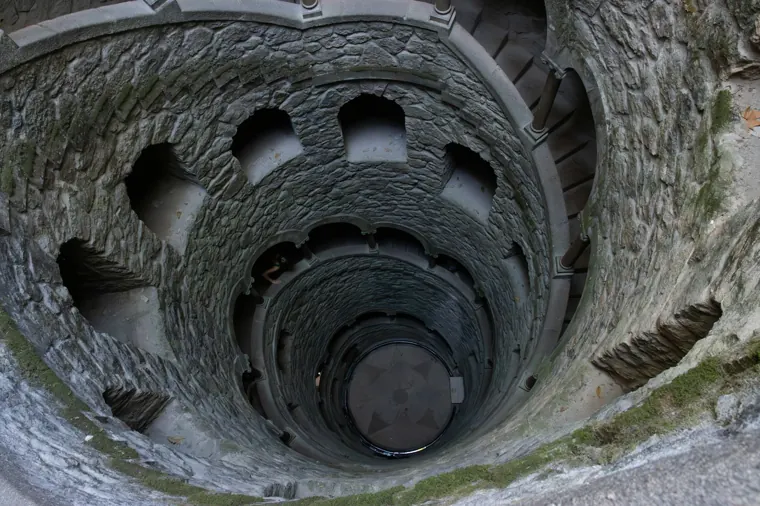 The one you walk into, not up
 Quinta da Regaleira
An early-1900s estate built as a coded garden — the descend-the-well-and-exit-the-tunnel move is the whole point.
Read the guide → The tower everyone underrates
 Sintra National Palace
The town-centre palace people photograph from the square and then walk straight past.
Read the guide →